
This is my first post in what I hope will be a series of brief investigations into cultural associations between “women” or ideas of women and something dirty, torrid, troubling, monstrous, silly, horrifying, unsettling, etc. As a shorthand, I’ll be referring to these things as “misogynistic.” My use of the word “misogyny” is informed by Kate Mann’s articulation of it in her book Down Girl: The Logic of Misogyny. According to Mann, misogyny functions as the police force of the patriarchy: it is a “political phenomenon” designed to “police and enforce patriarchal order” by encouraging/haranguing women into occupying certain socially prescribed roles over others (27). So, when I call something “misogynistic,” I want to draw attention to the way the misogynistic thing tends to limit the full humanity of the woman/women depicted in some way–either making her/them less than or greater than human–with the underlying political aim to limit women’s involvement in the social and political realm.
And even though my primary focus in this blog will be on the ways in which many cultural formations tend to especially limit the capacity and potential of women, it is also my contention that limiting any people based on gendered scripts causes and perpetuates harms for everyone, be they men or women, cis, trans, or gender non-conforming.
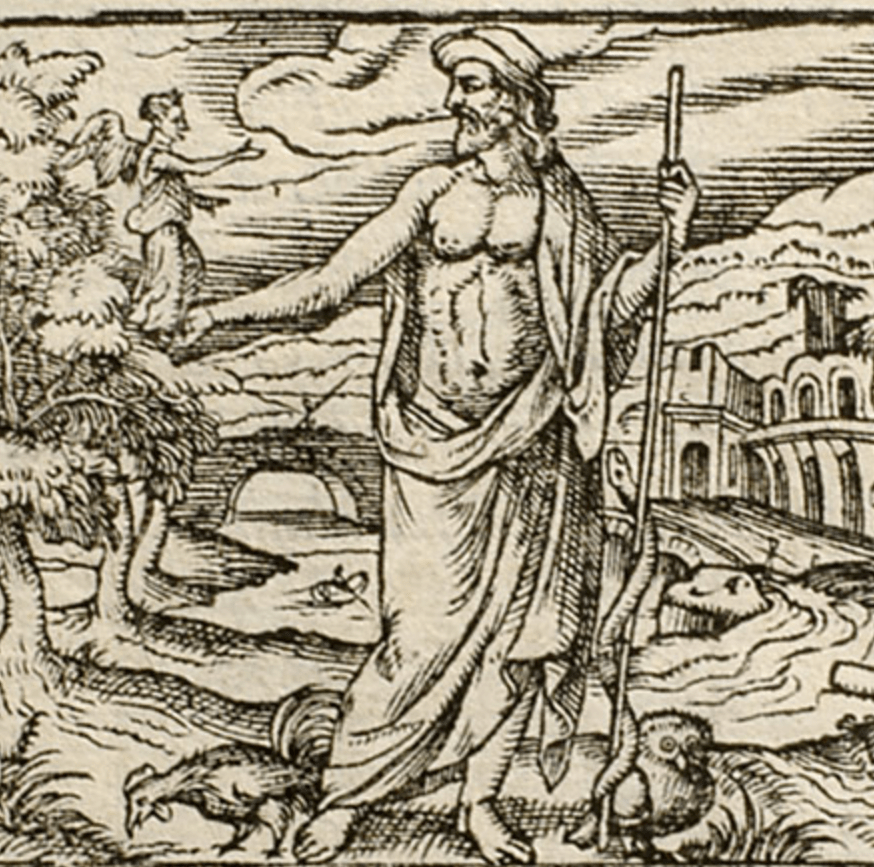
The above image, found via Wikipedia.org, is a Roman coin that depicts (presumably–I’m not a Classicist!) Venus on one side and and the shrine of Venus Cloacina on the other. When, as in the Venus Cloacina, women have been compared to or associated with sewers, that connection suggests BOTH that women are less than human (as in dirty, filthy, stinky) AND far greater than human (as in god-like, overwhelming). No one really knows why the goddess Venus become associated with the very useful and innovative drain that allowed Rome to become the superpower it became–the Wikipedia page mentions the association may have to do with Venus standing in for the Etruscan goddess Cloacina, who guarded the entrance to the city’s sewer system. But we do know that the association between the “venereal” and the “cloacal,” has a long history.
To begin to untangle that association, we should note that “cloacina” is a derivative of the word “cloaca.” From the Latin verb cluo, cluere, meaning “to cleanse,” “cloaca” also means in Latin, “sewer.” And in animal anatomy, a cloaca refers to a posterior opening in some vertebrates that usually includes the exit routes for the digestive, reproductive, and urinary tracts. Many birds and reptiles have a cloaca–an orifice through which waste exits the body and copulation occurs.
And while many mammals (including human females) typically have multiple, separate orifices for waste evacuation and reproduction, that hasn’t stopped many cultures from entertaining an imaginative conflation of these orifices, and by extension, an imaginative connection between what supposedly makes someone a “woman”–her vagina–and what makes her filthy–her asshole. Perhaps this is the imaginative link that deems Venus, the Goddess of Love, appropriate to stand atop and signify Rome’s great drain.
And there are other famous examples of these associations I could name. The following descriptions aren’t fully fleshed-out; but what intrigues me about these examples is the tendency towards synecdoche: that is, body parts are made to stand in for the whole body or even the idea of women more generally in society.
- English dramatist Thomas Nabbes in 1637 published a masque called Microcosmus, A Morall Maske in which the five senses are depicted. “Smelling” introduces himself as: “my Ladies Huntsman” who “keepe[s] some lesser beagles for her chamber-use to excuse the freenesse of her necessities eruptions.” And he goes on to describe his “Mistresse Cloaca” as having “a very stinking breath, before Misackmos perfum’d her, and she is now growne lesse common, then when her imperfections lay open.”
- Freud’s Wolf-Man, who after seeing his older sister and her friend “micturating,” describes female genitals as the girls’ “front-bottom” in The History of An Infantile Neurosis.
- Julia Kristeva, in Powers of Horror: An Essay on Abjection, discusses the “monstrous feminine” and her theory of the “abject.” The female’s grotesque corporeal body that exudes “defilement, sewage, and muck” from which we recoil allows us to distance ourselves from our own inherent corporeality.
- Lee Edelman discusses Hitchcock’s conflation of vaginal and anal symbols in “Rear Window’s Glasshole.” When snooping in the apartment of a suspicious neighbor (Thorwald), the female lead Lisa makes signals behind her back that her boyfriend, L.B. Jefferies, can see. Her gesture to her ring finger (a wedding ring) behind her back, coupled with the look Thorwald gives the camera, which is itself a ring, and Jefferies in his apartment compels Edelman to argue that “her ass substitutively doubles for his eye” and “participates in the visual logic that would return us to the ass” (86).
- In a climactic speech in Team America World Police – a puppet suggests that “pussies” (and likely by extension, people who have them) are only an “inch and a half away from assholes.” So, the puppet suggests we should put our trust in “dicks” who are able to discriminate between and also “fuck” both types of orifices.
- And folks have attributed to Aquinas and Augustine the idea that prostitutes/sex-workers are as necessary to society as a “cloaca” to a “pallatio,” or a sewer to a palace. But I should include this last one in a post of its own!
 Megan Herrold, OMS IV, PhD